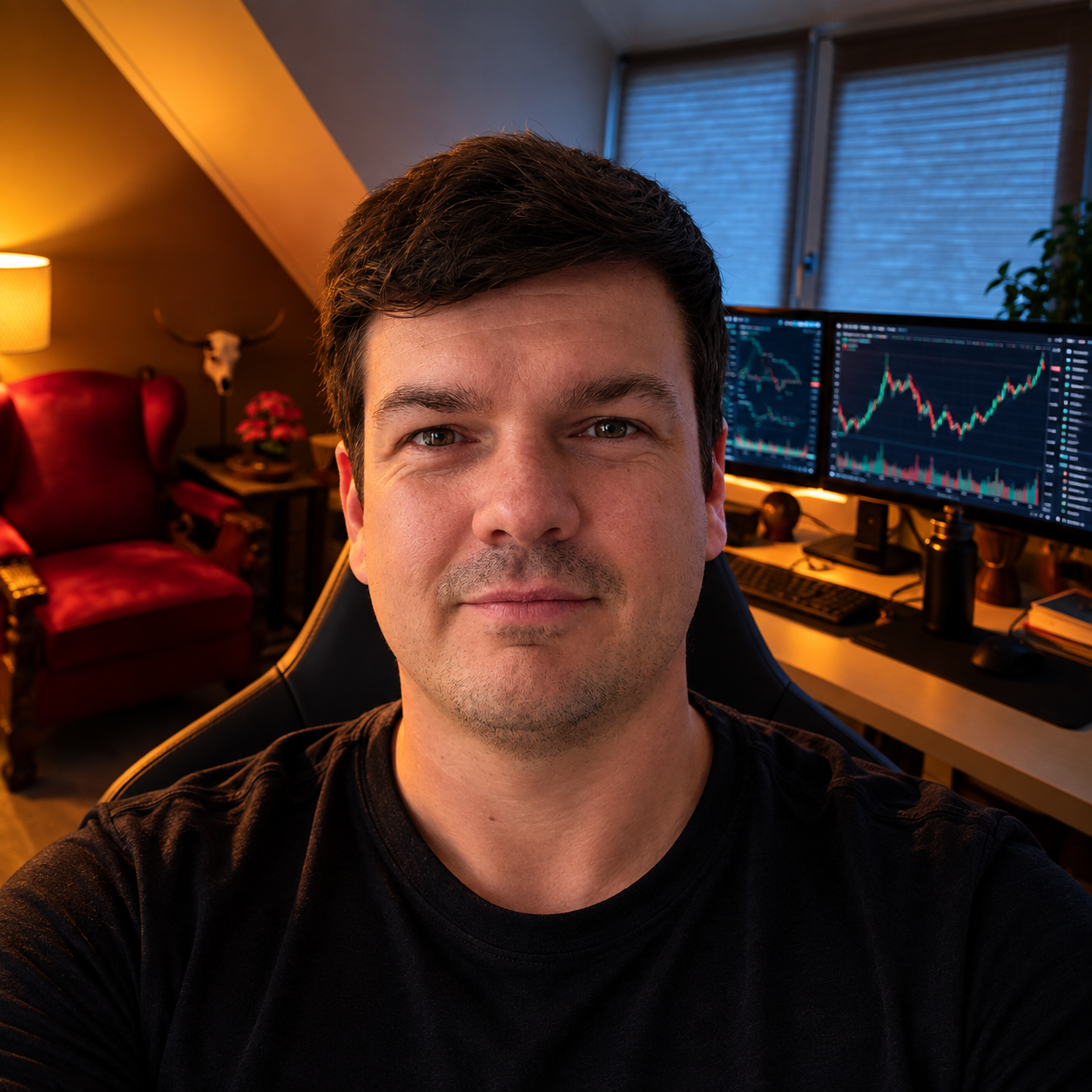
ABOUT SEM / THE PERSON BEHIND SEMTRADES
I work. I trade.
I keep my
independence.
A trader. An investor.
A process operator from the Netherlands.
I mostly trade swing failure patterns on Bitcoin and Ethereum. Structure, liquidity and risk give those decisions a framework. The work around the trade matters just as much: preparation, execution and an honest review afterwards.
This framework is profitable for me over time. I still make mistakes, take losses and keep improving. That is my experience with my own capital, not a guarantee that someone else will get the same result.
01 / THE LESSONS BEHIND THE PROCEDURE
I had a position.
I needed a plan.
I did not start with a finished system. I built it by finding out what did not work, taking responsibility for my decisions and doing the work again.
THE START / BITCOIN IN 2021
Holding and hoping.
I bought Bitcoin, followed the narratives and held through a market that was clearly changing. When my spot buys went wrong and the bear market took hold, I started learning to daytrade with a small account.
At first I had far more conviction than procedure. Losing one of my two small daytrading accounts in the FTX collapse was another expensive lesson. I could not control everything around me. I could start taking the decisions I made more seriously.
THE WORK / BUILDING OVER TIME
A small beginning.
A growing account.
That small account was the starting point. Over the following years, I built my trading capital with trading profits and other available money. I recorded trades, reviewed mistakes and kept refining the process around price, risk and execution.
For two years, I worked twelve-hour weekend shifts so I could trade during the week. Eventually, my average trading income could match my salary. I wanted to find out whether I could do it full-time.
NINE MONTHS FULL-TIME
Possible is not
the same as optimal.
I could cover the bills, but almost all the profits had to come out of the account. There was little left to invest or compound. With the capital I was trading, making trading carry every living expense was too much of a burden.
My ego got the proof it wanted: I could trade full-time. Looking back, I had started too early. That personal victory came with a real opportunity cost. A salary could have covered everyday life while the trading profits stayed available to build capital.
After nine months, I chose to return to work as a process operator in a five-shift system. The freedom I had been looking for was in combining trading with a steady salary. Having all day to trade was not the same as having a better life.
HOW I OPERATE NOW
Each part
has a job.
Work provides a salary. Trading has its own capital and risk boundaries. Investing has a longer horizon. Together they give me more room to build, without every trading result becoming a verdict on the month’s bills.
I am not still at the small learning-account stage. I have built something that works for me. I also know that learning a practical craft does not have a finish line. The task is to keep operating it well as the market, my capital and my life change.
02 / THE SAME PERSON, DIFFERENT RESPONSIBILITIES
Understand the process.
Know when to act.
In my work as a process operator, I use procedures, watch how a system behaves and respond to deviations. STOS brings that way of thinking to my trading.
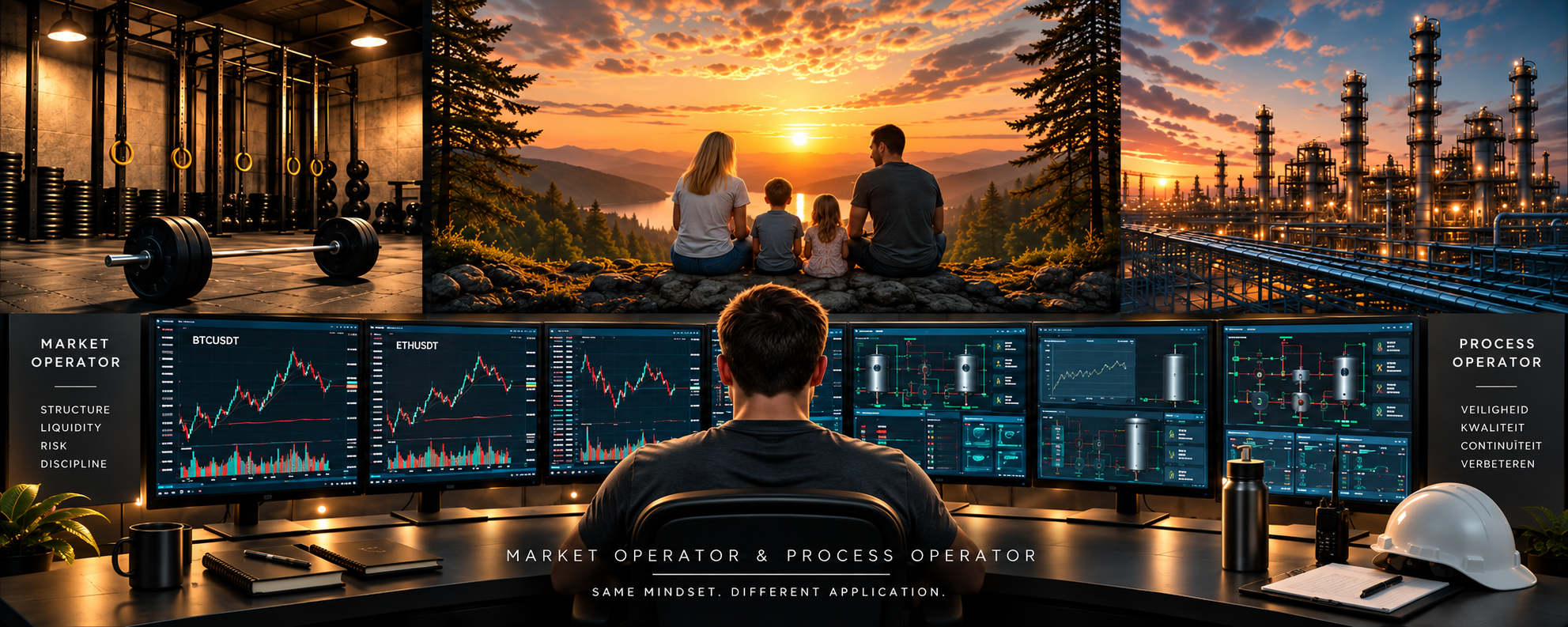
Observe before intervening.
On a chart, I cannot control the market. I can decide where I pay attention, what response I need and what would prove my idea wrong. A move beyond a level is information. I wait to see whether it holds or fails before deciding what to do.
Having time is not a setup.
More screen time does not mean more good decisions. Sometimes the right action is to leave it alone. I want a process that leaves room for work, family, training and recovery, rather than taking over all of them.
03 / MY WAY OF GIVING BACK
Shared freely.
On my own terms.
I learned from traders who were willing to show their work openly on X. SemTrades is my way of paying that forward.